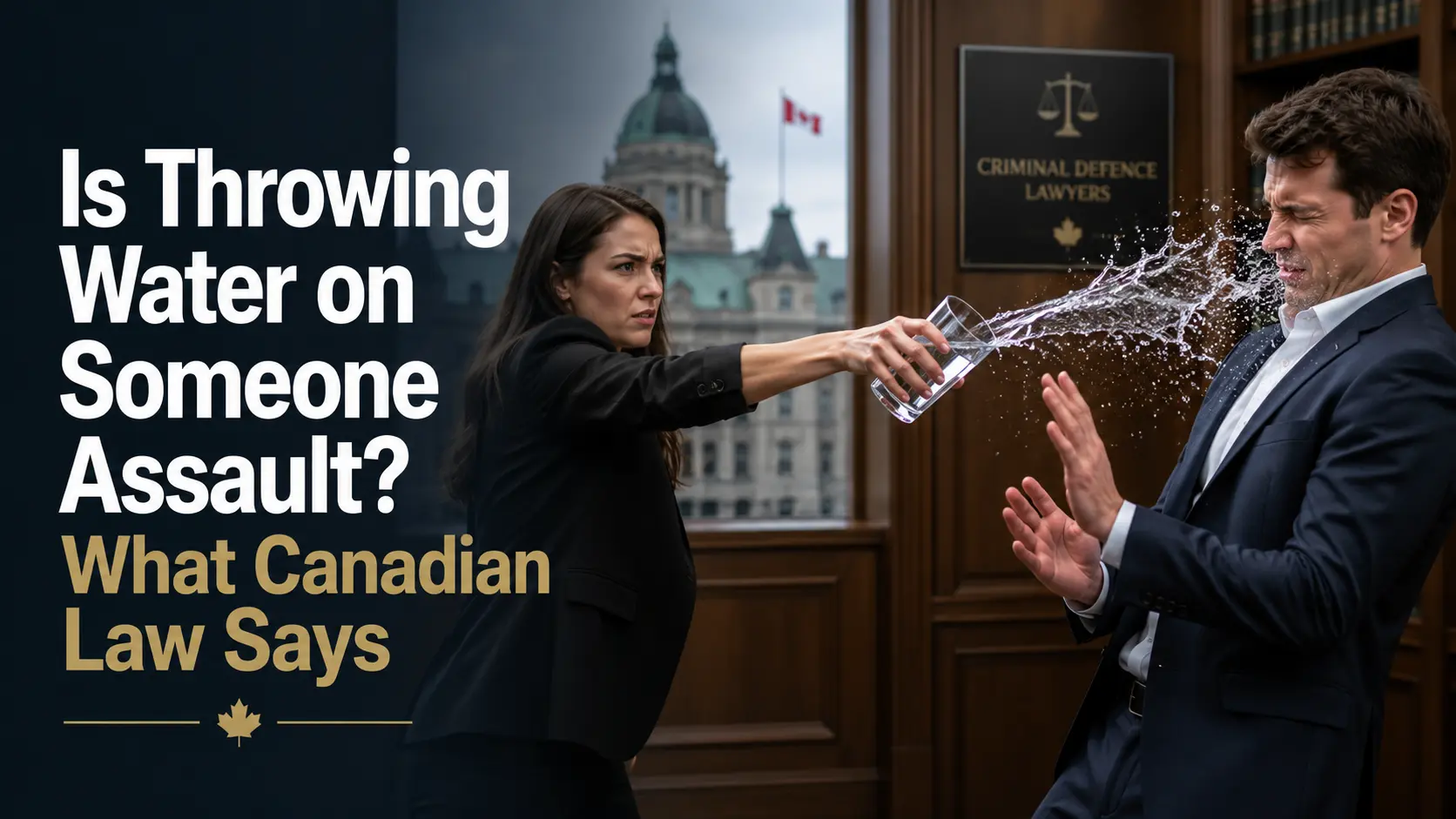
Is Throwing Water on Someone Assault
Throwing water on someone may seem minor compared to other physical confrontations, but it can still lead to legal trouble in Canada.
In some situations, throwing water, a drink, or another liquid at someone can be treated as assault if it involves intentionally applying force to another person without their consent.
That does not mean every accidental splash or harmless joke will result in a criminal charge.
Context matters.
Police and Crown prosecutors may look at what happened, why it happened, whether the other person consented, whether anyone was injured, whether an object was thrown, and whether the incident happened during a larger argument or threat.
If you have been accused of throwing water on someone in Calgary or elsewhere in Alberta, it is worth taking the situation seriously.
Even an allegation that sounds minor can create stress, release conditions, court dates, and possible consequences if charges are laid.
SCHEDULE A FREE CONSULTATION WITH A CRIMINAL DEFENCE LAWYER
Quick Answer: Can Throwing Water on Someone Be Assault?
Yes, throwing water on someone can be assault in Canada if it was intentional and done without the other person’s consent.
Under section 265 of the Criminal Code, a person commits assault when they intentionally apply force to another person without consent, either directly or indirectly.
The wording matters because “force” does not have to mean punching, kicking, or causing visible injuries.
It can include unwanted physical contact, including contact caused indirectly.
For example, throwing water onto another person during an argument may be viewed differently than accidentally spilling water while walking past them.
The legal issue is not only whether the contact was serious.
It is also whether the act was intentional, unwanted, and connected to force being applied to another person.
Is It A Crime To Throw Water at Someone?
It can be a crime to throw water at someone if the act meets the legal definition of assault.
A common misunderstanding is that assault only happens when someone is hurt.
In Canada, basic assault does not always require a visible injury.
If someone intentionally throws water at another person without consent, police may consider whether that act was an unwanted application of force.
That said, not every situation is treated the same way.
A splash in a swimming pool, playful conduct between friends, or an accidental spill may not be handled like throwing water at someone during a heated dispute.
The surrounding facts matter.
Some factors that may affect how seriously the situation is treated include:
| Factor |
Why It Matters |
| Intent |
Police may consider whether the water was thrown on purpose or by accident. |
| Consent |
Playful or mutually accepted conduct may be viewed differently than unwanted contact. |
| Context |
Throwing water during an argument, threat, or confrontation may make the allegation more serious. |
| Injury |
Burns, eye irritation, slipping, or other harm may affect the potential charge. |
| Object used |
Throwing a cup, bottle, can, or container may raise additional concerns. |
| Relationship |
Domestic, workplace, school, or public incidents may each create different consequences. |
The key point is simple: throwing water at someone is not automatically “nothing” just because water is involved.
SCHEDULE A FREE CONSULTATION WITH A CRIMINAL DEFENCE LAWYER
Does Assault Require an Injury in Canada?
No, assault does not always require an injury in Canada.
For a basic assault allegation, the focus is often on intentional, non-consensual force.
That force may be minor, but it can still be enough to trigger a police investigation depending on the circumstances.
Injury becomes more important when the allegation moves beyond simple assault.
If the incident causes bodily harm, involves a weapon, or creates a serious risk to the complainant, the potential charge may become more serious.
For example, throwing a small amount of cold water may be treated very differently from throwing hot water that causes burns.
The legal concern may also increase if the person throws the container itself, such as a glass, bottle, or mug.
What If the Water Was Hot?
Throwing hot water on someone can be much more serious than throwing cold water.
Hot water can cause burns, scarring, eye injuries, or other harm.
If someone is injured, police may consider whether the facts support a more serious form of assault.
Under section 267 of the Criminal Code, assault with a weapon or assault causing bodily harm can apply in certain circumstances.
In more severe cases, aggravated assault may be considered if the conduct wounds, maims, disfigures, or endangers the life of the complainant.
This does not mean every hot-water incident will lead to the most serious charge.
The details matter.
Police and Crown prosecutors may consider the temperature of the water, the extent of any injury, whether medical treatment was needed, what was said before or during the incident, and whether there is video or witness evidence.
What If You Threw a Cup, Bottle, or Drink?
Throwing a drink at someone can raise two separate concerns: the liquid and the object.
If someone throws water from a glass, bottle, mug, or can, police may look at whether the container itself was also thrown or used in a threatening way.
A splash of water and a thrown glass are not the same thing.
A hard object can cause injury, and that can change how the incident is viewed.
The same issue may come up with alcoholic drinks, coffee, pop, or other liquids.
Throwing a drink on someone in a bar, workplace, home, or public place may still be treated as unwanted force.
If the drink is hot, sticky, irritating, or thrown with an object, the situation may become more serious.
Is Throwing Water on Someone Battery?
Many online search results use the phrase “assault and battery,” especially in American legal discussions.
In Canada, the language is different.
In the Canadian criminal context, the more relevant term is assault, not battery.
The Criminal Code definition of assault includes intentionally applying force to another person without consent, either directly or indirectly.
So, if you are searching “is throwing water on someone battery,” the correct Canadian criminal-law question is whether the conduct could amount to assault.
U.S. resources may discuss battery as a separate criminal offence, but that wording does not match how Canadian criminal law is structured.
Battery may still appear in some civil-law discussions, but when someone is worried about police, charges, court, or a criminal record in Canada, assault is the more relevant term.
What If It Was a Joke?
A joke can still create legal problems if the other person did not consent and the act involved unwanted force.
For example, throwing water on a close friend during a water fight may not be treated the same way as throwing water on a stranger, coworker, partner, server, security guard, or someone you are arguing with.
The difference often comes down to consent, context, and how a reasonable person would understand the situation.
If the person who was splashed reports the incident to police, officers may not simply accept that it was “just a joke.”
They may look at what happened before the incident, whether there was conflict, whether there were threats, and whether other people saw or recorded what happened.
What If Someone Threw Water First?
If someone threw water at you first, that may be relevant, but it does not automatically make your response lawful.
Self-defence is fact-specific.
In general, the issue is whether you reasonably believed force or a threat of force was being used against you, whether your response was for a defensive purpose, and whether your response was reasonable in the circumstances.
Responding to a splash of water by throwing something dangerous, causing injury, or escalating the confrontation may create separate legal problems.
On the other hand, evidence that someone else started the incident may be important when reviewing the allegation.
If you are accused, it is usually better not to argue your side directly with the complainant or try to resolve things through repeated messages.
Those messages may later become evidence.
Can You Be Charged for Throwing Water on Someone?
Yes, a person can be charged for throwing water on someone if police believe there are grounds to proceed with an assault allegation.
Possible outcomes may include no charge, a warning, an arrest, release conditions, a court date, or further investigation.
In some cases, police may also collect statements, review video footage, speak with witnesses, or examine injuries.
A charge does not mean the person is guilty.
The Crown still has to prove the case.
However, even being charged can create immediate practical issues, including no-contact conditions, restrictions on where someone can go, employment concerns, family stress, and future court obligations.
What Should You Do If You Are Accused of Throwing Water on Someone?
If you are accused of throwing water, a drink, or another liquid on someone, avoid making the situation worse.
Do not contact the complainant if police have told you not to.
Do not post about the incident online.
Do not ask friends to pressure the other person to “drop it.”
Do not assume the allegation will disappear because no one was seriously hurt.
Instead, try to preserve anything that may help explain what happened.
This may include text messages, videos, photos, names of witnesses, receipts, workplace records, or anything showing the broader context.
It is also wise to get legal advice before giving a detailed statement to police.
A criminal defence lawyer can help you understand the allegation, the possible consequences, and the next steps in the process.
SCHEDULE A FREE CONSULTATION WITH A CRIMINAL DEFENCE LAWYER
How Browne Criminal Defence Can Help
Browne Criminal Defence is located in Calgary, Alberta and assists people facing criminal allegations, including assault-related charges.
If you have been accused of throwing water, throwing a drink, or using force during an argument, legal advice can help you understand what the Crown may need to prove and what options may be available based on the facts.
Every case is different.
The right approach depends on the evidence, the charge, the complainant’s statement, any injuries, witness accounts, video footage, and the surrounding circumstances.
Speaking with a criminal defence lawyer early can help you avoid mistakes, understand your release conditions, and prepare for the court process.
SCHEDULE A FREE CONSULTATION WITH A CRIMINAL DEFENCE LAWYER
Final Thoughts: Is Throwing Water on Someone Assault
Throwing water on someone may sound minor, but in Canada it can still lead to an assault allegation if it was intentional and unwanted.
The details matter.
Cold water, hot water, a thrown drink, a cup, a bottle, an injury, a joke, or a heated argument may all be treated differently.
If you are facing an allegation in Calgary or elsewhere in Alberta, take it seriously.
Getting legal advice early can help you understand the charge, protect your rights, and make informed decisions about what to do next.
SCHEDULE A FREE CONSULTATION WITH A CRIMINAL DEFENCE LAWYER
FAQ: Is Throwing Water on Someone Assault
Is throwing water on someone assault in Canada?
Throwing water on someone can be assault in Canada if it involves intentionally applying force to another person without their consent. The seriousness depends on the facts, including the context, intent, injuries, and evidence.
Is it a crime to throw water at someone?
It can be a crime to throw water at someone if the act is intentional and unwanted. Accidental splashing or clearly consensual joking may be viewed differently, but throwing water during an argument or confrontation can create legal risk.
Does assault require physical injury in Canada?
No. Basic assault in Canada does not always require physical injury. The allegation may be based on intentional, non-consensual force. Injury becomes more important when police or Crown prosecutors consider more serious forms of assault.
Can throwing hot water lead to more serious charges?
Yes, throwing hot water may lead to more serious concerns if it causes burns, bodily harm, disfigurement, or other significant injury. The facts of the case will affect how the allegation is assessed.
In the Canadian criminal context, the relevant term is assault. While some U.S. sources use “battery” for unwanted physical contact, Canadian criminal law generally addresses this type of conduct through assault.
Disclaimer
The information provided on this website is for general informational purposes only and does not constitute legal advice. Viewing this website, submitting an inquiry, or communicating with our firm through this site does not create a lawyer-client relationship. No representation is made that the quality of the legal services to be performed is greater than the quality of legal services performed by other lawyers. For advice tailored to your unique circumstances, please consult with our lawyers directly. Past results do not guarantee similar outcomes. This website may contain links to external resources; we do not endorse or assume responsibility for the accuracy of third-party content.